
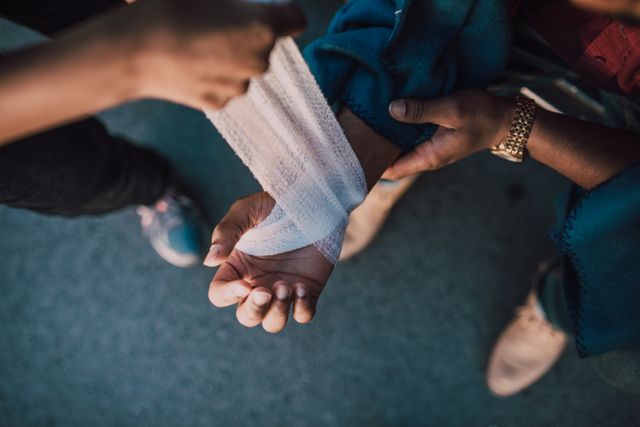
Emergency medicine operates under a strict chronological imperative often described as the "Golden Hour"—the 60-minute window following catastrophic injury during which prompt medical intervention prevents mortality. Yet in developing infrastructure environments, conventional centralized dispatch models fail due to ambiguous addresses, informal street naming conventions, and severe radio-telephony latency. The First Responders Africa mobile platform reimagines pre-hospital emergency activation by converting hyper-local smartphones into a synchronized, community-powered lifeline.
Architectural Anatomy of a Sub-Five-Minute Dispatch
How does our system consistently achieve on-scene arrival times four to five times faster than municipal EMS services? The secret lies in distributed proximity telemetry combined with multi-channel push notification protocols:
Dynamic Geofence Radius
When an SOS panic trigger is initiated via one tap, high-accuracy GPS coordinates create a real-time polygon boundary, alerting only verified volunteers within an optimal 1.5 to 3.0-kilometer radius.
Automated Incident Triage
The caller selects from standardized, pictorial triage buttons (Severe Hemorrhage, Respiratory Arrest, Obstructed Airway, Motorcycle Collision), instantly alerting responders possessing corresponding certifications.
Zero-Latency VoIP Telephony
The instant a responder accepts dispatch, encrypted, in-app VoIP channels open immediately. The responder coaches the caller on initial hemorrhage control while navigating on foot or motorbike.
Downstream Ambulance Handover
As the civilian responder stabilizes the patient with basic life support, vital sign logs and incident GPS telemetry automatically route to incoming hospital ambulance transport units.
Engineering for the African Connectivity Landscape
Developing emergency software for African urban and rural realities requires anticipating cellular outages, spotty 3G handoffs, and battery-conservation limits. The First Responders application leverages low-bandwidth protocol buffers and SMS-fallback triggers. Even when mobile data is completely interrupted, critical SOS alerts successfully bridge through localized USSD gateways, transmitting raw latitude, longitude, and caller identification in under 400 milliseconds.
Furthermore, all essential first-aid tutorials—including step-by-step CPR visual timers, choking maneuvers, and snakebite protocols—are cached permanently on user devices in English, Swahili, French, and Arabic. The app remains fully operational even when 100% offline.
"Technology alone does not save lives; technology that mobilizes compassionate, equipped neighbors transforms entire cities into interconnected hospitals."
Rigorous Vetting and Volunteer Safeguards
Safety and integrity sit at the foundation of our dispatch ecosystem. Every volunteer on the platform undergoes stringent background validation, government national identification cross-checks, and in-person practical skills verification. Responders are categorized into clear tiers—ranging from Community First Aiders to Emergency Medical Technicians (EMTs) and Registered Nurses—ensuring appropriate scope-of-practice deployment during complex disasters.
By placing verifiable life-saving power directly inside citizen pockets, we are turning passive bystanders into active guardians of their communities. Download the app today and join Africa's fastest-growing emergency response collective.